StartupOS
- Role
- Product Designer
- Timeframe
- 2022
- Outcome
- Founder platform MVP shipped in five months on a template system built to scale
- Stack
- Figma, Material Design, Design systems, UX writing, Jira
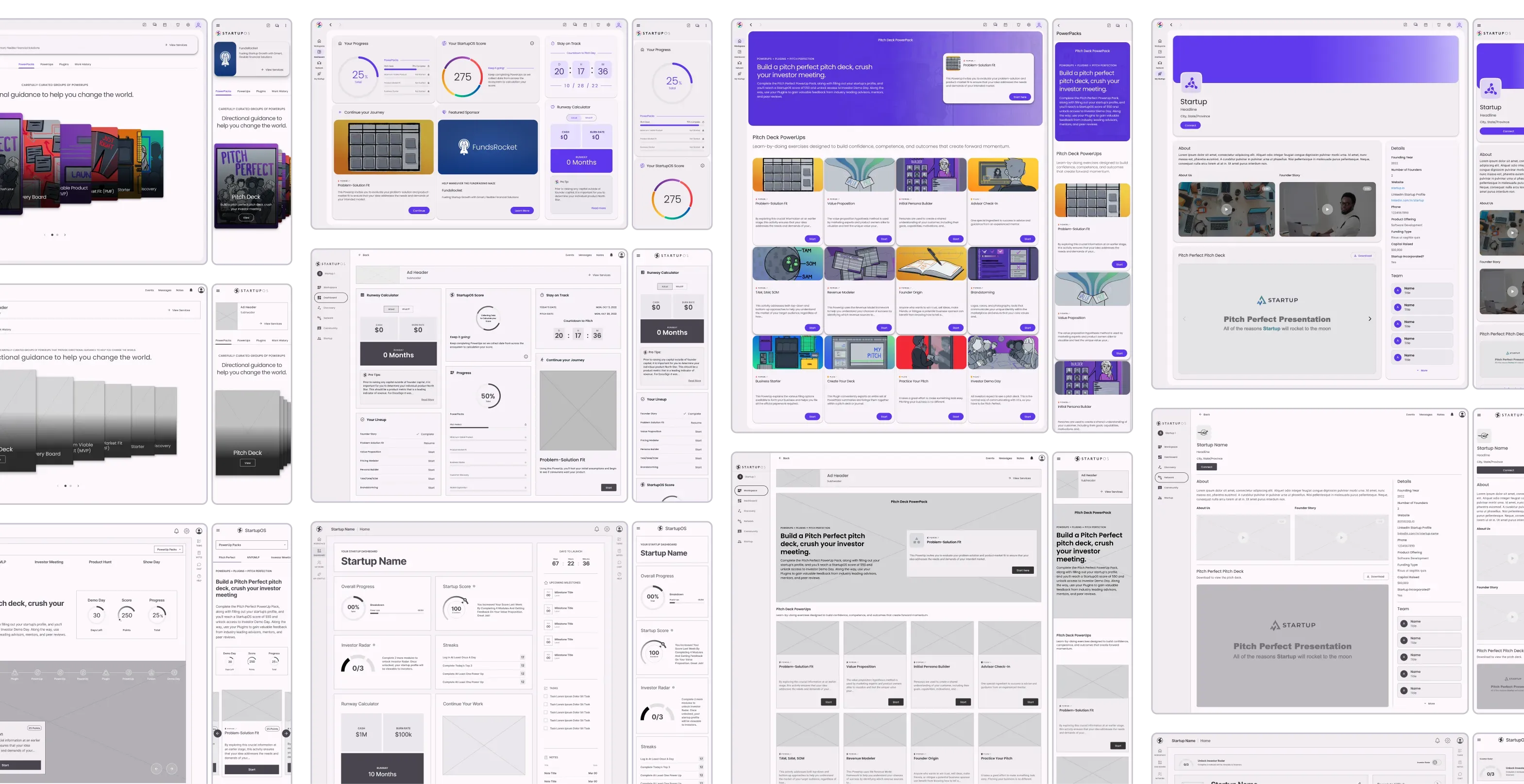
StartupOS set out to make startup success more attainable: a platform where early-stage founders get structured guidance instead of drowning in the sea of online advice. In 2022 I designed every surface of it, landing pages through dashboards through networking. The MVP shipped in five months. The story is the decision that made five months possible.
The setup
The product strategy centered on Learning Paths: sequenced journeys that take a founder from “hopeful but overwhelmed” to investor-ready. The first path answered the question founders asked most, “how do I make a pitch deck investors will love?”, and culminated in a live Demo Day. Real founders, real investors, real deadline.
The constraints: a small team, a five-month clock, executive direction that liked to change, and no content designer yet, so I was writing the copy too.
The tempting path
Design each Learning Unit as its own bespoke experience. Every topic is different, so every topic “deserves” custom treatment. The first few units would have been showpieces.
Then the math: a path needs many units, each custom design multiplies production and review time, and every change in executive direction would hit every unit individually. Five months would have bought three beautiful units and an apology.
The pivot
I designed one reusable Learning Unit template and put the craft there instead. Five versions, iterated against user feedback, from first wireframe to the shipped pattern. Sequencing did the rest: units were ordered by dependency, so each one prepared founders for the next and the path itself carried the pedagogy.
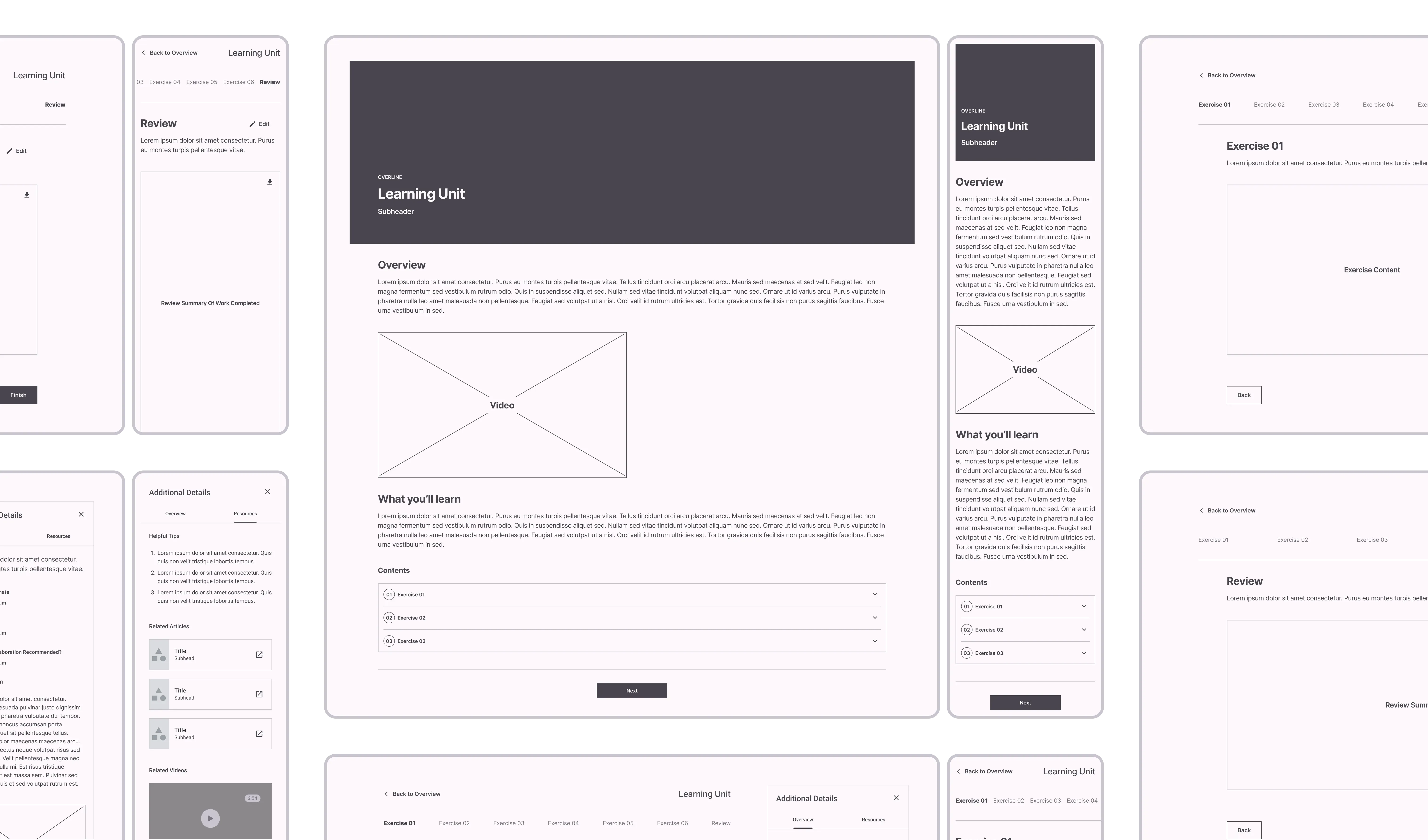
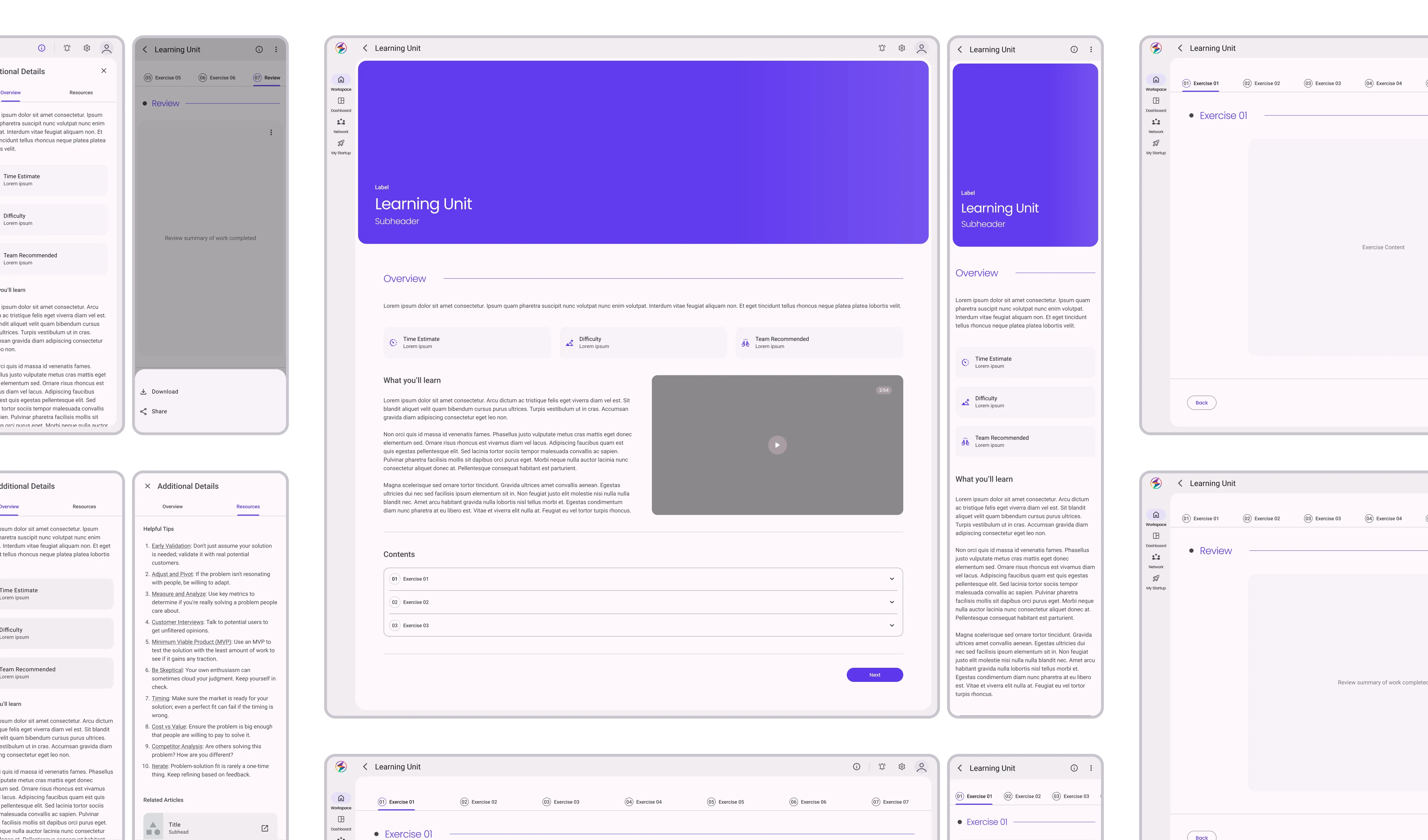
The template turned churn into a non-event: when direction changed, the change landed in one place and propagated everywhere. When we finally hired a content designer, they slotted into the template instead of triggering redesign cycles. New units became a content problem, not a design project.
Getting specific
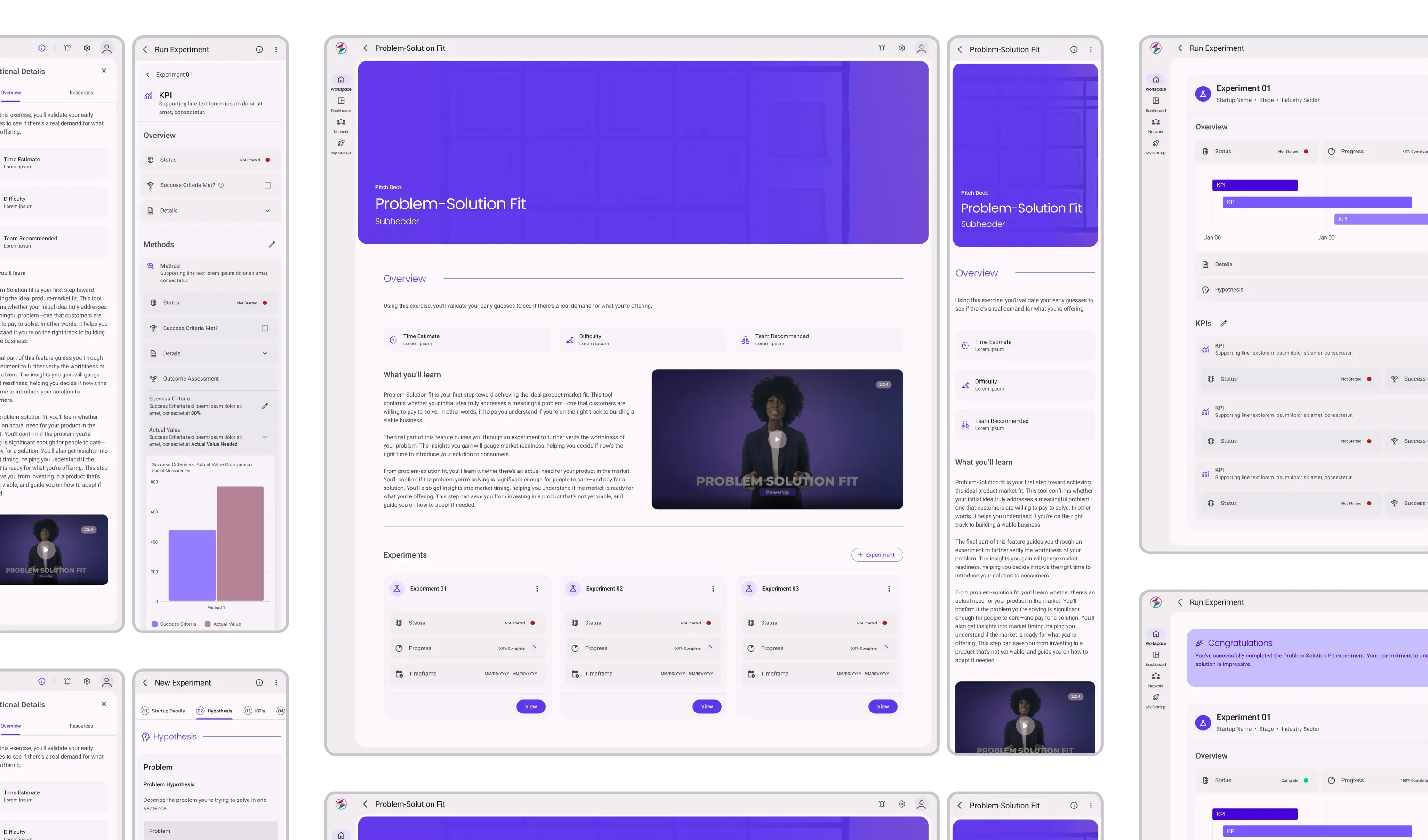
The proof unit was Problem-Solution Fit, where founders run a real validation experiment: form a hypothesis, pick metrics and a method, set success criteria, run it, then face the results honestly. That is a lot of lean-startup method to put in front of an overwhelmed non-expert, so the design is a wizard: one decision per screen, a review step before committing, and a clear fork afterward, proceed, refine, or run another experiment.
The tradeoffs
A template constrains. Some topics fit it imperfectly, and it cost us the bespoke showpieces a portfolio loves. We also cut features to protect quality; executing fewer things well beat overextending, every time it was tested. I would make both trades again.
Where it landed
The MVP shipped inside the five months, founders used the Pitch Deck path to sharpen real decks, and Demo Day feedback validated the platform. Just as importantly, the template system left a foundation the team could scale content on without me in the room.
2022, seen from 2026
This is clearly dated work: pre-AI process, hand-built artifacts, Material Design foundations. I keep it here because the instinct is the part that aged well. Build the system that makes the artifacts, not the artifacts, is the same decision that shipped Asteri’s token system to production in six weeks four years later. Craft ages. Instincts compound.